Real Estate
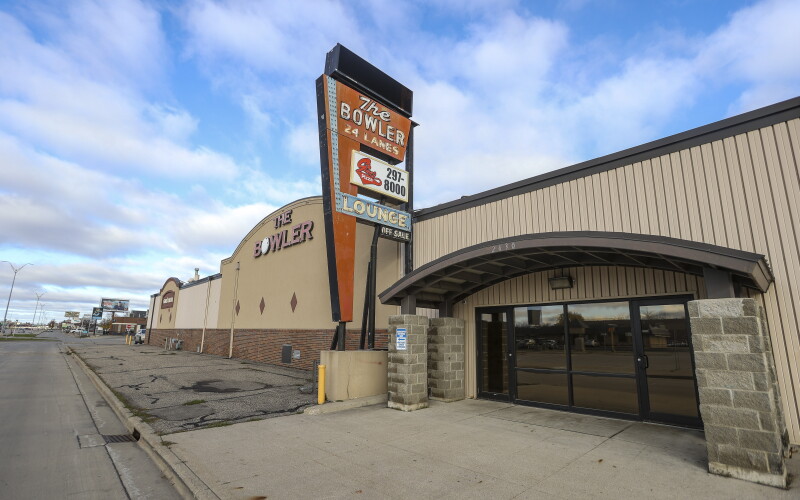
The Bowler in Fargo for sale for $4.5M
By Carlos Martinez
Advertisement · Why this ad?
Lila Johnson is a seasoned business reporter with a background in finance, having graduated from the University of North Dakota. She has previously worked with local business journals and focuses on small business success stories and entrepreneurial initiatives.
More from Lila →
S.Gnatiuk/sergign - stock.adobe.com By Jenny Schlecht Today at 11:47 AM Listen Comments Share Share this article News Reporting News Reporting Based on facts, either observed and verified firsthand by the reporter, or reported and verified from knowledgeable sources. The Trust Project What is this? U.S. Supreme Court justices pushed back on the argument of lawyers for North Dakota ranchers in a case about whether a private company has to pay legal fees in an eminent domain case. The high court on Monday, Nov. 9, heard the case of Hoffmann v. WBI. In that case, WBI Energy, a pipeline company, used eminent domain to obtain land from McKenzie County ranchers, including Leonard and Denae Hoffmann, Randall Stevenson and Rocky Prestangen. The ranchers did not agree on the level of compensation and took the company to court. ADVERTISEMENT Contributed / Institute of Justice The Natural Gas Act allows companies to take land by eminent domain for natural gas infrastructure but does not say how to determine just compensation for the property taken. Four circuit courts in the U.S. have ruled that state law — which often requires higher payments than the “just compensation” required in the Fifth Amendment of the Constitution — must be followed. The parties reached a confidential settlement in federal court in 2021, but the ranchers argue that they are entitled to legal costs, too. North Dakota U.S. District Court Judge Daniel Hovland in 2024 ruled in their favor and ordered WBI to pay them roughly $380,000. That decision was overturned by the U.S. Circuit Court of Appeals for the Eighth Circuit. Justices across the ideological spectrum questioned the argument of the ranchers' attorneys that state law should come into play in the case, asking pointed questions about other parts of federal law in which language had explicitly moved such matters to the state. Matters regarding natural gas pipelines do not do so, they said. More policy news: Environmental advocates seek policy change to reduce effects of industrial ag on climate 8h ago Minnesota ag needs growth, not just stability 8h ago Robert F. Kennedy Jr. praises regenerative ag efforts at North Dakota event 3d ago Institute for Justice Deputy Litigation Director Bob McNamara argued the case on behalf of the ranchers. He told the justices that even though the Natural Gas Act puts a pipeline company in the role of the government in eminent domain cases, it doesn’t make the companies sovereign over state law, including the North Dakota law in Hoffmann v. WBI. “Nothing in the statute extends the United States’ sovereign immunity to private companies, and that means they don’t have it,” McNamara said. ADVERTISEMENT He argued that the Fifth Amendment provides a “floor, not a ceiling” for payment in eminent domain cases, which he said allows states to establish laws requiring compensation to go above “just compensation” to take into account fair market value. But both Paul Whitfield Hughes, an attorney representing WBI Energy, and Zoe A. Jacoby, assistant to the solicitor general, shared a statement: “Sovereign immunity is not doing the work here,” each said in their arguments. Eminent domain for pipeline projects is a matter of federal law, Hughes said. “State law governs state takings. Federal law governs federal takings,” he said. Jacoby said federal law makes private companies a delegee of the federal government in pipeline cases, putting the companies in the place of the government, which does not pay attorneys’ fees. Comments Share Share this article News Reporting News Reporting Based on facts, either observed and verified firsthand by the reporter, or reported and verified from knowledgeable sources. The Trust Project What is this? Tags Tags POLICY NORTH DAKOTA PIPELINES By Jenny Schlecht Jenny Schlecht is the director of ag content for Agweek and serves as editor of Agweek, Sugarbeet Grower and BeanGrower. She lives on a farm and ranch near Medina, North Dakota, with her husband and two daughters. You can reach her at [email protected] or 701-595-0425. Twitter Facebook Listen to this article Conversation ADVERTISEMENT What To Read Next Policy Democrats gain influence over trade agenda, but tariff repeals to hit Trump veto wall 4d ago · By David Lawder / Reuters Policy China says US farm purchases hinge on tariff-cut deal 4d ago · By Reuters staff reports Policy Hot-button issues like data centers and property taxes expected at NDFB annual meeting 4d ago · By Jenny Schlecht ADVERTISEMENT Get Local
By Carlos Martinez

By Diane Nguyen

By Mark Gilliam
By Jenna Larson